
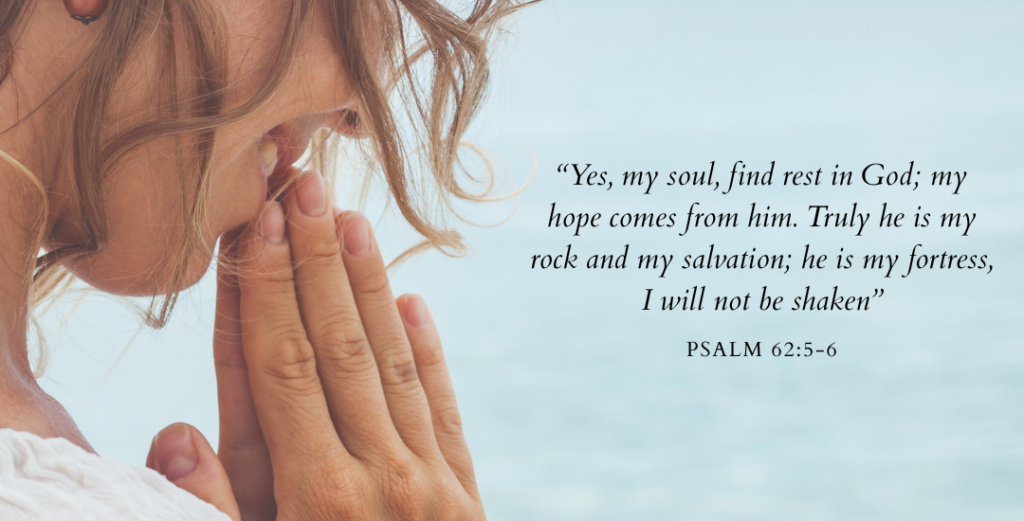
For years I wore “busy” like a badge of honor, filling my days with more commitments and to-dos than any one person should carry. When I plopped into bed at night, I’d recall the day and think it was a “win” because ninety percent of my checklist was marked off. My calendar was full, but my soul was empty—exhausted, worn out, and spiritually parched.
All I was receiving from this kind of living was emptiness, and it drew me away from the very One who created life – the One who wanted to give me life and life abundant. I wanted the full life Jesus offered me, and I knew it had to be different than just having a full calendar.
I’ve been on a journey with the Lord and He’s opened my eyes to some beautiful truths regarding rest and how it is tied to my identity in Christ. This journey took me all the way back to the beginning to review Creation and the story of the Israelites, to understand who God is, how God implemented rest, and His heart toward rest. These truths have been shaping my heart, my living, and my calendar, and I am confident they can shape yours, too.
As I studied the story of Creation in Genesis, I learned several things: Rest is relational, rest is rhythmic, and rest receives. It’s worth noting that Adam and Eve were created on the sixth day. So, if God rested on the seventh day, their very first day of life was spent resting—resting in God’s finished work of creation. In that rest, they were receiving. Their first day was spent living out their identity as God’s people. They were in a relationship with God, delighting in His presence, receiving His goodness, and basking in His glory. They were not performing, striving, working, or producing. They were fully content in their identity as God’s people, fully satisfied in their relationship with Him and the rhythm of rest He established. They simply received what He gave them.
It wasn’t long, though, before they began to doubt God—and that doubt caused them to forsake their identity, disrupt their rest, and distance their relationship with Him.
The Israelites’ journey also teaches us several things. They spent 400 years in Egypt. 400 years of oppression, slavery, brick-building, and working under harsh treatment led them to believe their lives were dispensable. Work, work, work—no break. They didn’t get to rest every seventh day. The Israelites were only as good as what they could produce in a commodity: bricks. They were in bondage to production and performance.
A few chapters later, after God delivered them from Egypt, He meets with Moses at Mount Sinai and sets up the ground rules for their camping trip in the wilderness. This is where God establishes a covenant with Israel—many scholars look at Sinai as God marrying Israel. He delivers the Ten Commandments, and the fourth is the gift of Sabbath. But we must start with the first: “I am the Lord your God, who brought you out of Egypt, out of the land of slavery. You shall have no other gods before me” (Exodus 20:2-3, NIV).
One thing that stands out is this: Because of the Israelites’ slavery and oppression in Egypt, God needed to reinforce who He was for His people, so they could reestablish their identity as His people. Under the Pharaohs, they had come to believe—almost brainwashed into believing—that their worth was in their work and their identity in their productivity.
We live in a similar “Egypt,” one that tells us the very same thing. Our culture’s obsession with performance, production, and people-pleasing competes with our need for rest and our need to ground our identity in Christ. It distracts us from our purpose, derails us from life’s true meaning, and deceives us into believing lies about God—that doing more, being more, and trying harder is what He wants from us.
The truth is that our worth is not in our work, and our identity is not in our productivity. When our identity is grounded in Christ, we can trust that God is a God of relationship, not a god of commodity and production.
In Exodus 20:2-3, God reminds Israel of who He is, what He has done for them, and the response they should have because of who they are as His people. He delivered them out of empire, chaos, production, and perfectionism. It is almost as if God is saying, “I am a good, loving, kind, and patient God. The pharaohs commanded you to work yourself to death, but I want to bless you with life, and this includes rest. You are not machines or a cog in the wheel like pharaohs think you are. You are My children, My precious people, and your identity, worth, and value are in Me, not in what you do.”
Maybe you’re like me and you have wrongly understood who God is. Maybe you, too, have believed the lie that He wants you to do more, be more, try harder—to work, perform, and prove how good and worthy you are because of what you do and how you excel and achieve. Or maybe you think God would like you more if you work harder, or that He will be more pleased with you if you are running on fumes. Girl, I get it, and let me assure you that these are all lies. The kind of lies that keep us in bondage and keep us from experiencing a healthy and vibrant relationship with the Lord.
Spreading ourselves thin and toiling was never God’s intent for us. As God’s children, we can rest in our identity in Him and rest in the truth that we are deeply loved – not because we earned it or deserve it, not because of any work we have done. We are deeply loved because God is love, and it is His desire that we experience His love. Learning to rest in the Lord includes learning to live loved.
God demonstrated His love for us by dying on the cross for our sin, by taking our place, so that by accepting His gift of grace, we could live in relationship with Him. Like Adam and Eve resting in God’s finished work of creation, we too can rest in God’s finished work of salvation. He did the work we could not do. We cannot achieve it; we must simply receive it and rest in what He accomplished on our behalf.
In Matthew 11:28-30, Jesus extends an invitation for us to come to Him, to surrender and trust Him with our burdened lives, and we will find rest for our souls. “Come to me, all you who are weary and burdened, and I will give you rest. Take my yoke upon you and learn from me, for I am gentle and humble in heart, and you will find rest for your souls. For my yoke is easy and my burden is light. (NIV)”
Rest is found in the person of Jesus—in abiding and remaining in Him and resisting the substitutes that never provide lasting refreshment.
But what do we so often do? We say we trust the Lord and then live like everything depends on us. Have you ever thought, “If I plan just right, I can get the best outcome or avoid what I fear may happen?” Carrying the weight of outcomes burdens our souls. Measuring ourselves by how well we keep things together can deplete us, because outcomes were never ours to carry and because they were never truly in our control. All this striving reveals a lack of trust in God as the One who is sovereign. Sometimes our desire to control is an affront to His transforming work in our lives.
True rest in God stems from trust in God. The extent that we release control to the Lord is the extent to which we will trust Him. Learning to rest means learning to trust by releasing control and acknowledging that God is in control and that He can be trusted. Trusting the Lord means we don’t have to have a finger in every pie, that we don’t have to stress and be anxious, because we have faith that as we abide in Christ, His Spirit will lead us moment by moment, every day. When we trust Him in this, we can better rest in Him.
What we believe about God, and how we trust and rest in Him, shapes our identity, and impacts how we live. Yahweh is not a harsh taskmaster who wants us to think we’re only as good as what we produce. He pursues a covenant relationship—one of trust, friendship, delight, devotion, and rest in Him. That’s the God I’ve come to know and the identity I keep coming back to rest in, and you can too.
You are invited to live in relationship with God, to abide in Him and adopt His rhythm of rest, so you can receive His goodness and love. In God, you can be fully content in your identity as His daughter and fully satisfied in your relationship with Him. The peace and joy found sitting at the feet of the Savior will strengthen and sustain you in every season.
This week I want to encourage you to take notice of your relationship with God, as well as your heart toward rest. Are there any areas where you need to be still and receive God’s love and peace? Are there rhythms of rest or abiding that you need to get back to, or maybe start for the first time? God is already waiting to meet you right where you are. Lean in to Him and rest confidently in your identity as His beloved daughter.
